Getting to know Tirto Pattern in Tenun Mulya: The Beauty of the Brantas River in Kediri Woven Fabric
- Tenun Mulya
- Jul 8, 2025
- 2 min read

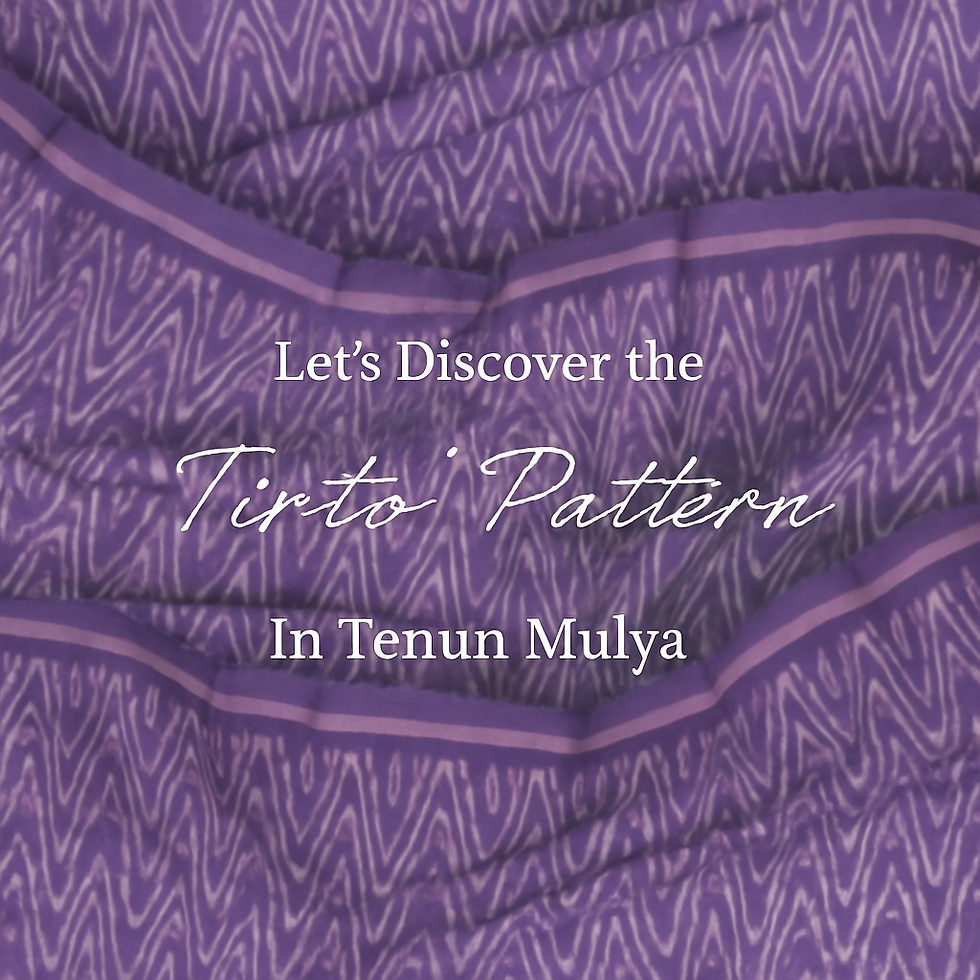
Tirto pattern is one of the typical pattern from Kediri City which has a deep meaning and alluring visual beauty. The word “tirto” comes from the Javanese language meaning water, which describes the source of life and fertility. This pattern is directly inspired by the water flow of the Brantas River, a large river that flows in the Kediri area and is an important part of the lives of the surrounding community. The philosophy of this pattern reflects the hope that human life continues to flow with enthusiasm, prosperity, and happiness, just like the endless flow of water.
Visually, the Tirto Pattern has a distinctive pattern in the form of zigzags or winding lines that illustrate the dynamics of river currents. This pattern is arranged repetitively and consistently, but can still be varied to produce a flexible and interesting motif. The zig-zag shape is not only a decorative element, but also a symbol of strength, resilience, and continuity in life. Each piece of fabric using this pattern seems to carry a message about how humans must continue to move forward to face challenges like a swift river current.

In its application, Tirto pattern often come in elegant and calming color combinations. One combination that is often found is purple and green. Purple symbolizes splendor and tranquility, while green depicts balance and fertility. Both create a harmony that strengthens the aesthetic value as well as the philosophical meaning of this pattern. Tenun Mulya Kediri is one of the craftsmen who continues to preserve the existence of the Tirto Motif through its superior woven products. Through this weaving, they not only produce high-quality fabrics, but also keep the cultural heritage alive and recognized by the younger generation.
Tirto pattern is proof that woven fabric is not just a fashion product, but also a medium to convey cultural values and local stories that are rich in meaning. This fabric is suitable for use as clothing and accessories that are full of aesthetic and cultural values. By wearing Tirto-patterned fabrics, we are participating in preserving local culture and appreciating the work of traditional craftsmen who have passed down the art of weaving from generation to generation.
Written by Nikita Danila


Comments